About the Liberty Bridge
The Liberty Bridge (known locally as Szabadság híd) is one of Budapest’s most iconic sights, instantly recognizable by its striking, vibrant green color. The bridge connects District XI on the Pest side, home to the bustling Great Market, with District V on the Buda side, where the historic Gellért Hill is located.
The Liberty Bridge offers a more casual, playful charm compared to its more classical counterpart, the Chain Bridge. It serves as a lively public space where yellow trams drive past and locals gather to watch the Danube drift by.

Facts
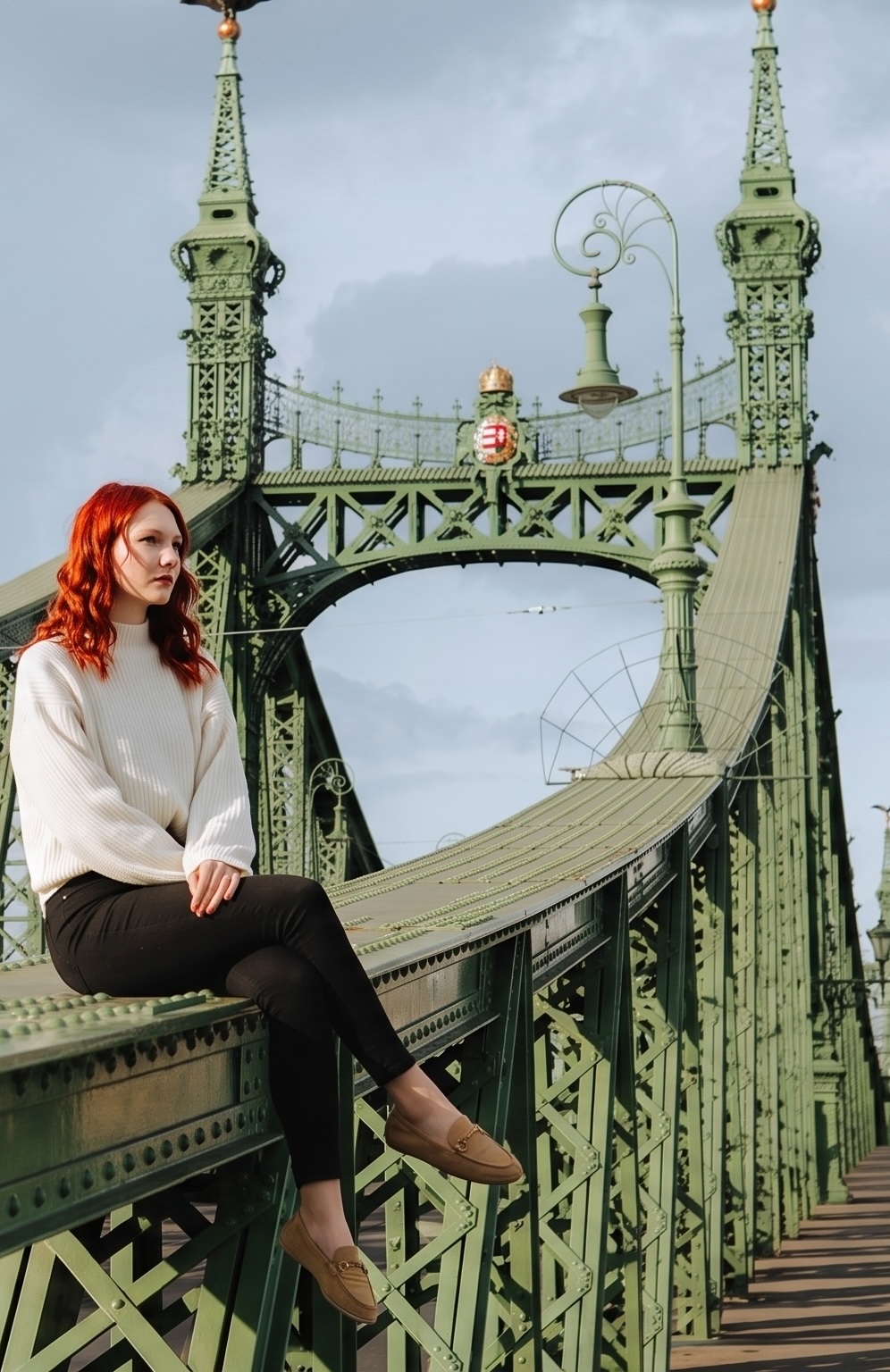
Designed by Hungarian architect János Feketeházy, it was engineered as a cantilever bridge. The bridge was built between 1894 and 1896 as part of Hungary’s Millennium celebrations. It was officially opened in the presence of Emperor Franz Joseph, who took it upon himself to hammer in the final silver rivet.

DiD you know?

A name change and the first bridge reborn
The bridge was originally named the Franz Joseph Bridge, but after being heavily damaged during World War II, it became the very first permanent Danube bridge to be rebuilt and reopened in 1946. That was the moment when the bridge was renamed to “Liberty Bridge”.
Fun Fact: Built after the Chain Bridge and the Margaret Bridge, the Liberty Bridge was originally Budapest’s second-newest Danube bridge. But because it was the first to be restored after World War II – reopening just one year after the war ended – it became the city’s oldest bridge back in use.
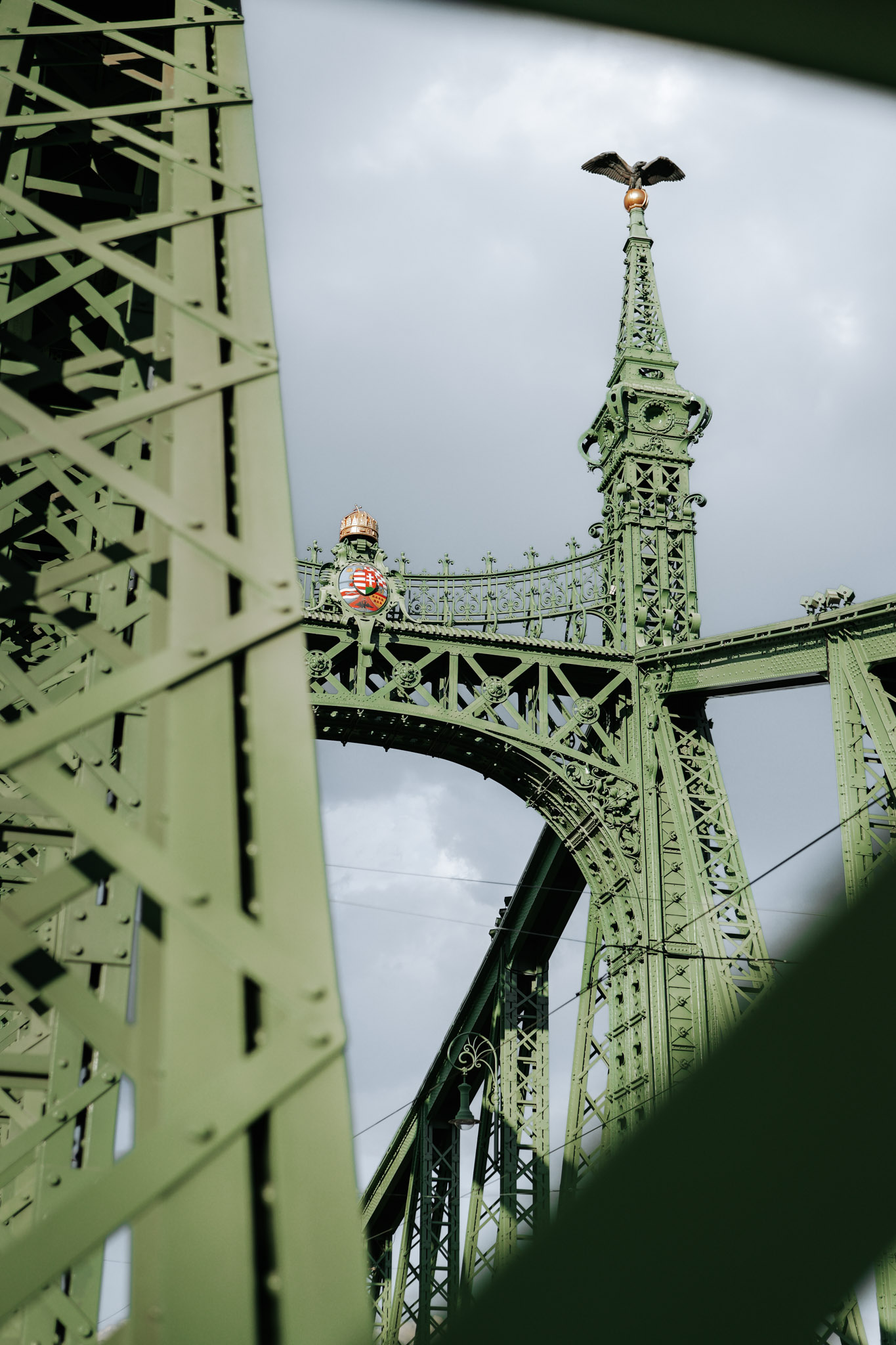
Impressions of the Liberty Bridge
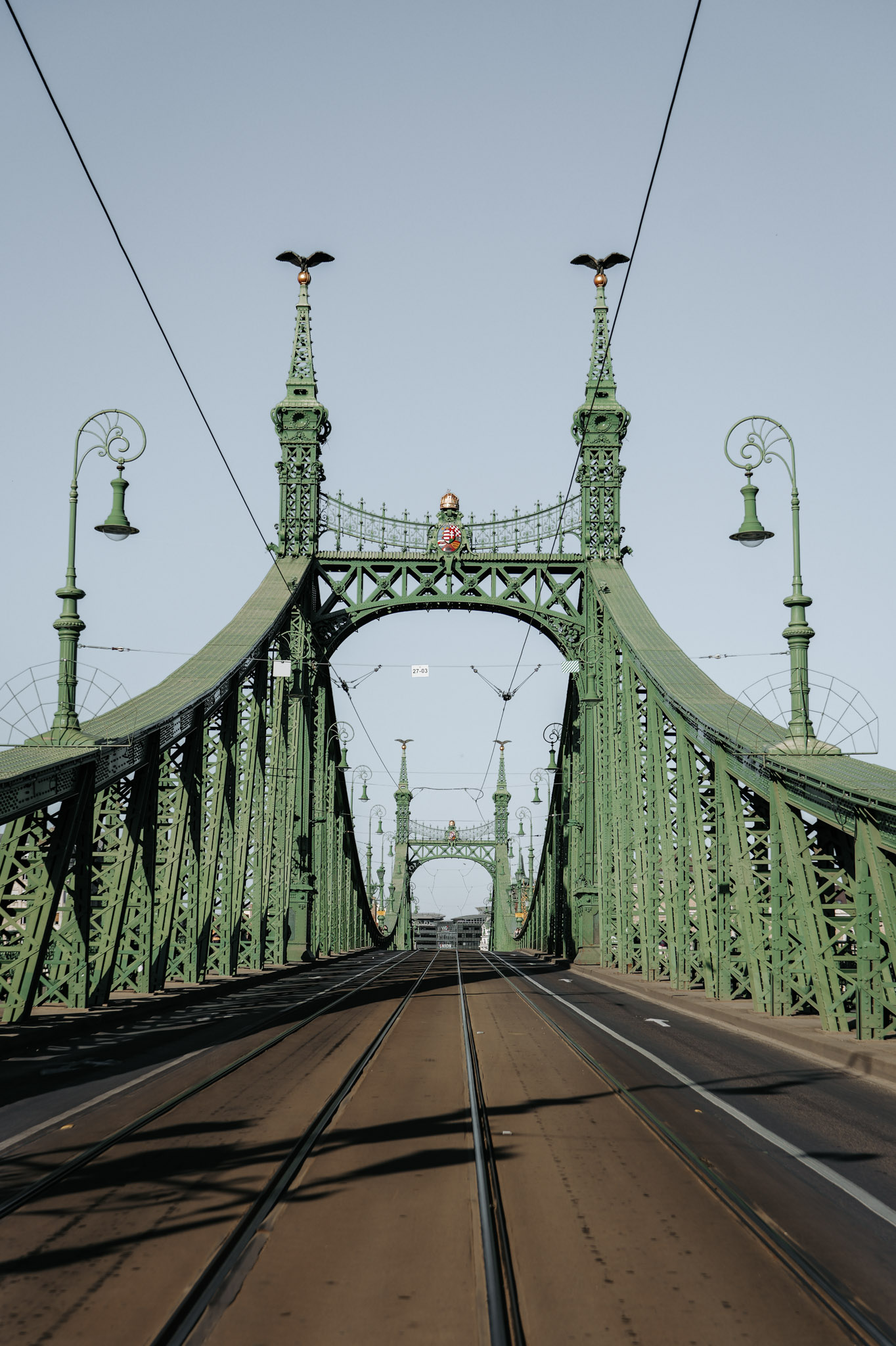
Stepping onto the pedestrian walkway during the late afternoon, the first thing that strikes me is the sheer, un-photoshopped intensity of its vibrant green color against the blue sky. The geometric iron beams, throwing long shadows, and the passing yellow trams that come across the bridge every few minutes contribute to one of the most memorable images of Budapest.
But despite the steady flow of tourists and locals moving between the city’s two halves, the pace and rhythm here is unhurried and the atmosphere conveys a laid-back and stress-free ambiance. The bridge feel more like a living, breathing part of Budapest’s modern outdoor culture than a historical landmark. This is further emphasised by the people who use the Liberty Bridge as a place to meet up for a drink or a bite to eat.

How I Experienced the Liberty Bridge
As the evening approaches, the bridge transforms into an open-air living room for locals and travelers alike.
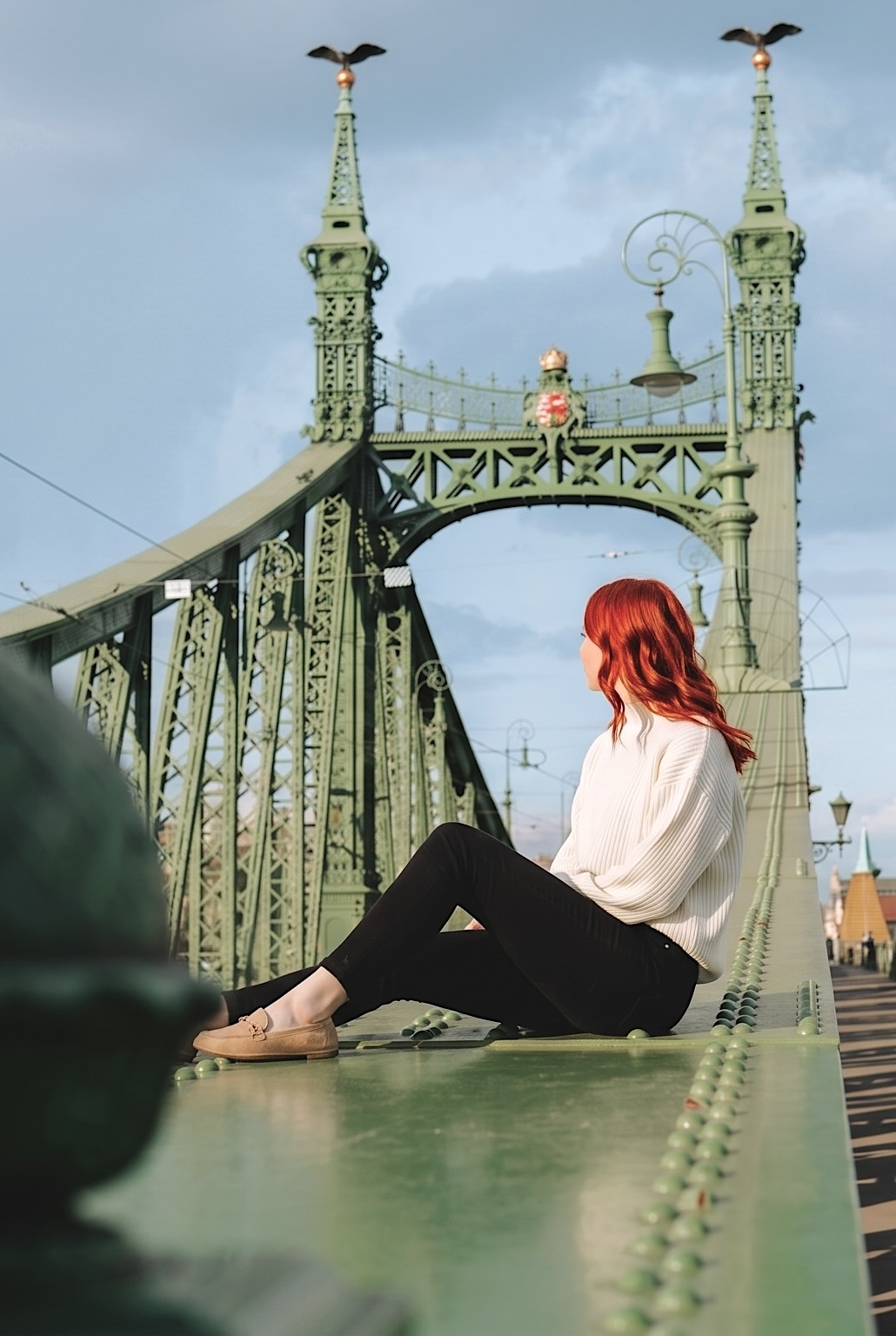
I watched groups of friends carry snacks and cold drinks up to the low-slung metal pillars in the middle of the bridge. You need a little bit of an arm force to pull yourself up onto the smooth green steel, but if you find an empty spot you can just climb, sit back, catch the breeze, and watch the city move below. The footsteps from people passing and the conversations from people enjoying an early evening here create a grounding rhythm. A reminder of how beautifully a historic structure can adapt to modern life.
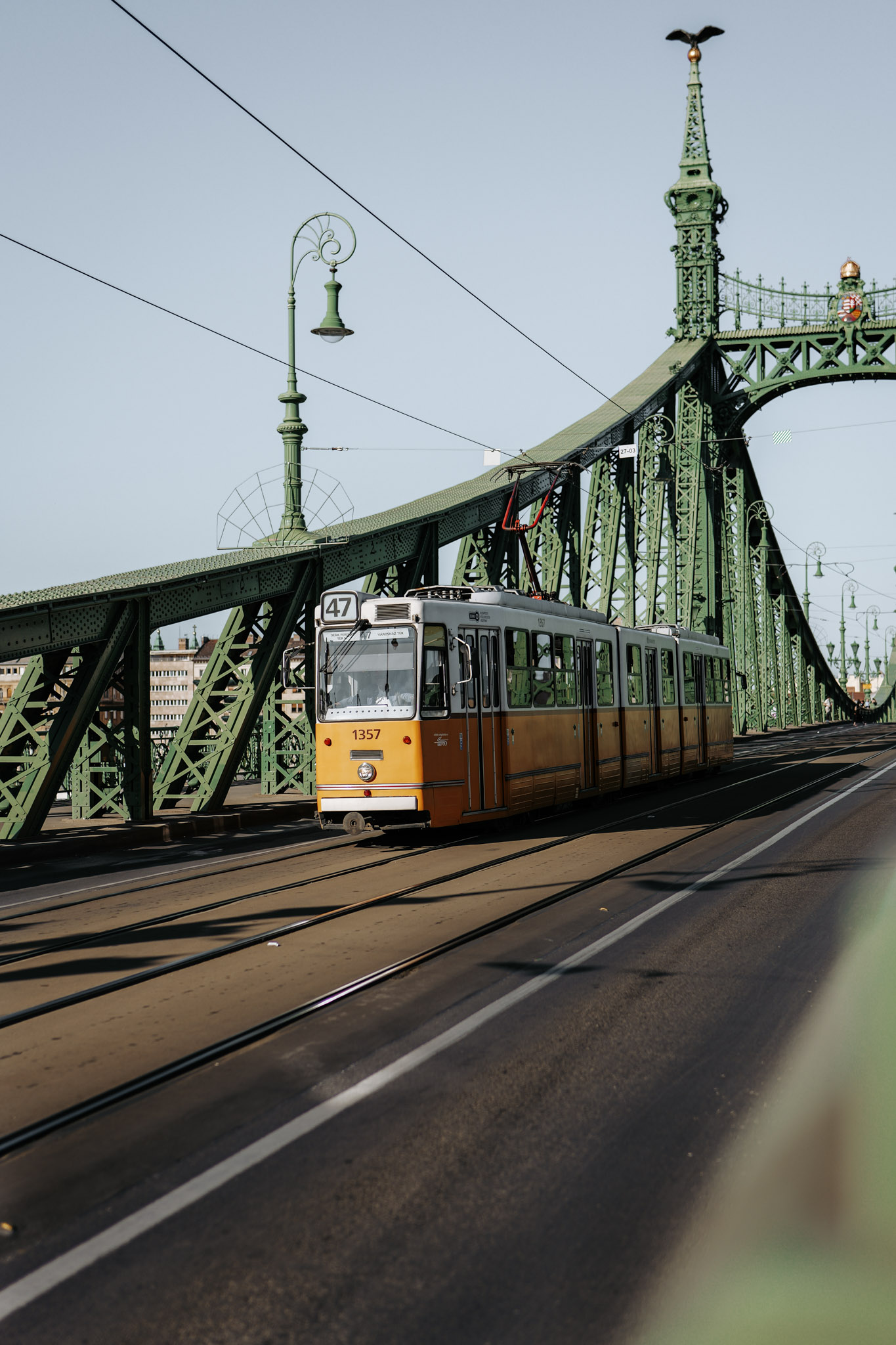
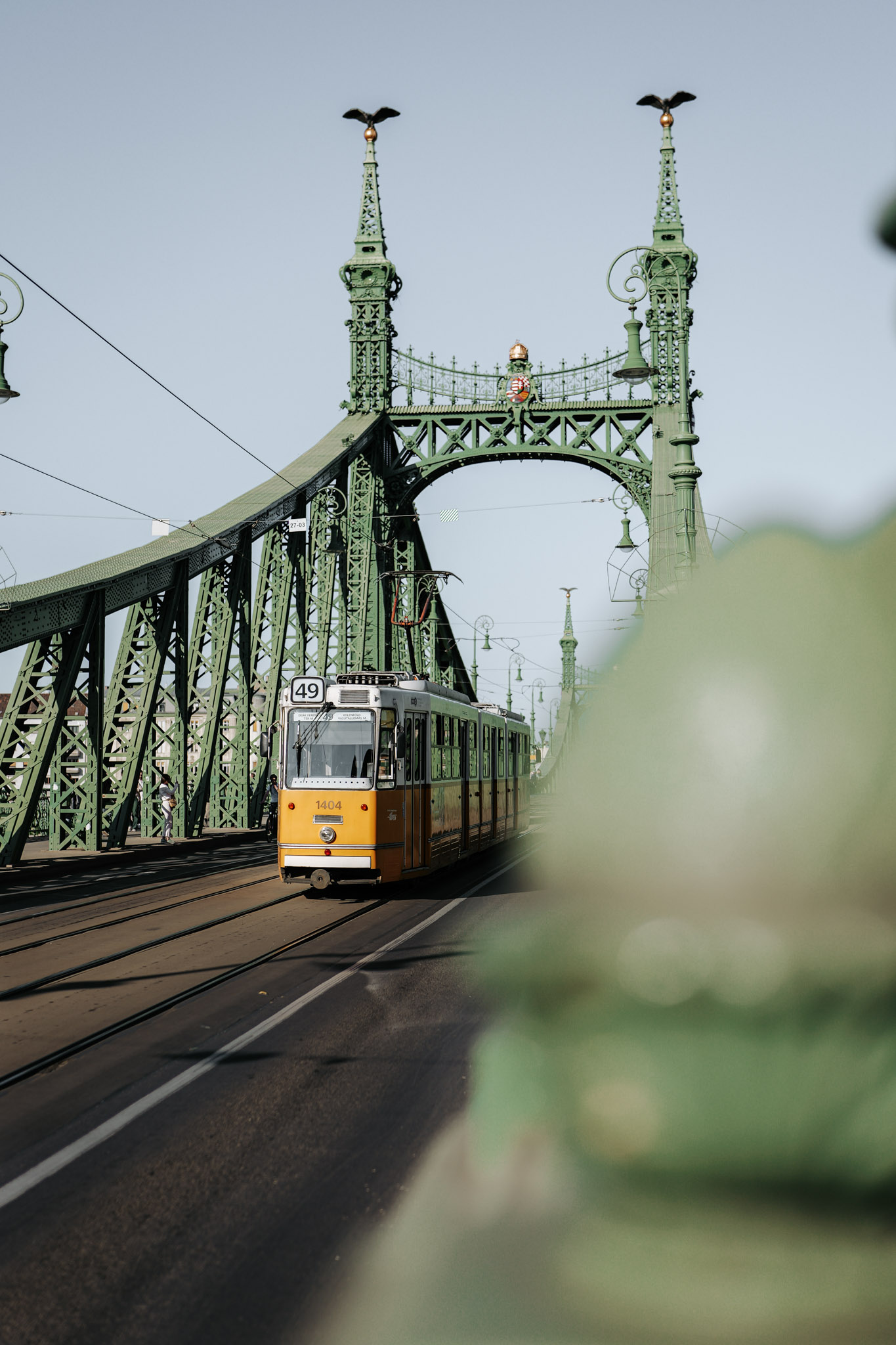
On another afternoon, absolute timing luck caught up with me. Emerging from the trails of Gellért Hill, I found the bridge completely closed to automotive traffic for a local event, leaving the entire bridge open exclusively to pedestrians and public transit. Standing at the end of the bridge on the Buda side, without cars blocking the view, I captured one of my favorite snaps from Budapest: the crisp, yellow form of Tram 47 gliding perfectly against the backdrop of the deep green arches. Catching those two iconic symbols of Budapest perfectly aligned in a single, moment made me incredibly grateful for the everyday magic that sometimes just happens.
Magic Moment

Your Guide to Visit the Liberty Bridge
If you are planning your Budapest travel itinerary, a walk across the Liberty Bridge should be on your list. Because it is positioned directly between the historic Great Market Hall on the Pest side and the walk up to Gellért Hill or a visit at the Gellért Thermal Baths on the Buda side, it serves as a natural, highly scenic pedestrian connector.
Liberty
Bridge
How to spend your time here:
The bridge is located in the city center, and you can’t miss it as you approach the Danube.
Pack a light snack or something to drink from a nearby shop, and enjoy sitting on the lower architectural beams.
Photographing the bridge is incredibly popular, especially when tracking the iconic yellow tram lines 47 and 49 as they cut across the tracks.
To capture the best frames, look for interesting foreground details along the structural railings or wait for the soft light of the early evening to illuminate the green ironwork against the sky.

Final Thoughts on the Liberty Bridge
The Liberty Bridge is an absolute iconic landmark that perfectly captures the youthful, scenic energy of Budapest.
The bright contrast of the classic yellow trams crossing the bold green iron framework makes it one of the most picturesque spots in the city.
Make sure to don’t just cross it, but experience it. The bridge comes with a relaxed and carefree feeling, that you don’t want to miss.
Further Tips & Recommendations

Budapest Sips
Tips where to get a nice sip. (Coming soon!)
Buda Castle
Discover Buda Castle, where restored buildings, stunning views, and remarkable architecture come together. A beautiful landmark that needs to go on your “Must-visit” list.
Coffeetuned
Coffeetuned offers a welcoming space, specialty brews, and passionate baristas that make the place worth seeking out. You don’t want to miss this when in Budapest.
Hungarian Parliament
The Hungarian Parliament Building is probably the most striking landmark that comes to mind when you think of Budapest. Read here, to learn how beautiful it really is.